
13·
1 month agoThere was something like
# sleep for about a second on modern processors
math.factorial(10000)
After it was found we left it in the code but commented out along with a sleep(1) for posterity.
Aka csm10495 on kbin.social
There was something like
# sleep for about a second on modern processors
math.factorial(10000)
After it was found we left it in the code but commented out along with a sleep(1) for posterity.
Yeah I hate when I read through a unit test and realize it doesn’t actually test anything other than itself.
I’ve thought about this wrt to AI and work. Every time I sit in a post mortem it’s about human errors and process fixes.
The day a post mortem ends with “well the AI did it so nothing we can do” is the day I look towards… with dread.
If you buy every single combination of numbers for the lotto, you can’t lose.
Special shout out to the person who committed a gigabyte memory dump a few years ago. Even with a shallow clone, it’s pretty darn slow now.
We can’t rewrite history to remove it since other things rely on the commit IDs not changing.
Oh well.

The UI goes in circles. I wish we stopped changing things when they aren’t broken.

I guess if it was a daily unlimited good pizza party instead of a small raise given as long as I had the job; then maybe it would be a better deal.
If I’m either getting an extra $100 a month or $20 of pizza every day… I think pizza wins.
What are the chances we get daily free pizza?
If it’s not daily: I’d take the money. If daily: I’d have to think about it.
If you read this far and it’s not clear: I’m joking.
For something end-user facing: I could understand this argument.
In this case they were more or less just calling a C function that had an unsigned long long as the parameter they were setting negative.
The whole ‘bug’ was that the other side of the function call was seeing a positive number no matter what.
The real situation was a bit more complicated, but that’s the gist.
I once had a QA engineer file a bug saying they couldn’t do negative testing since negative numbers were converted to positive.
The function took an unsigned integer. Took a lot of explaining to get them to understand that negative testing isn’t necessarily negative numbers.
Bottom left made me miss Kmart
Through the magic of make, you can write code that changes if statements to while loops then changes it back after compilation passes or fails.
I only give good advice.

Any considerations towards becoming a non profit or otherwise tax exempt entity (US: 501c3)? Some employers match donations to those (which could lead to more monies).
I’d be down for a smart watch with like a week of battery life, with a backlight on lift, and I guess NFC for paying.
I know I won’t get that combo, but I can dream.
It’s been too many years since I’ve played on a tire swing.
Warning: talking out of my butt a bit so take with a grain of salt.
I wonder if you could look at micropython. You could implement a unix like world on top of micropython then use micropython as the layer where a normal os would be.
It would be miserable and likely impossible to be fully unix compliant but could be a fun thing to play with. I would be amazed if it ever somehow could run native unix binaries.

Can confirm this type of thing. Under the Microsoft umbrella stuff doesn’t get special treatment or exemptions from rate limits.
Instead we make multiple accounts and randomly pick ones to use for various api calls. We waste time fighting with secondary rate limits for them as well as guess how to avoid them.
That relies on donations which may or may not come. I understand in a perfect world that makes sense, but in the real world even those foundations often rely on corporate muscle. Without that enterprise money, I’m not sure how they’d stand.
This is probably a minority opinion, but I think OSS prospers most when there is corporate muscle behind it.
A company with paid engineers that puts engineering time into fixing and bettering open source software can possibly be a good company.
Closed source ends up being the worst of all worlds. If there is an issue, you’re stuck waiting for someone else to possibly fix it. At least in open source, either you can try to fix it, or you can pay someone else to try to fix it.
At the end of the day, I think a lot of the Linux success actually comes down to this.

Even in ipfs, I don’t understand discoverability. Sort of sounds like it still needs a centralized list of metadata to content I’d, etc.


















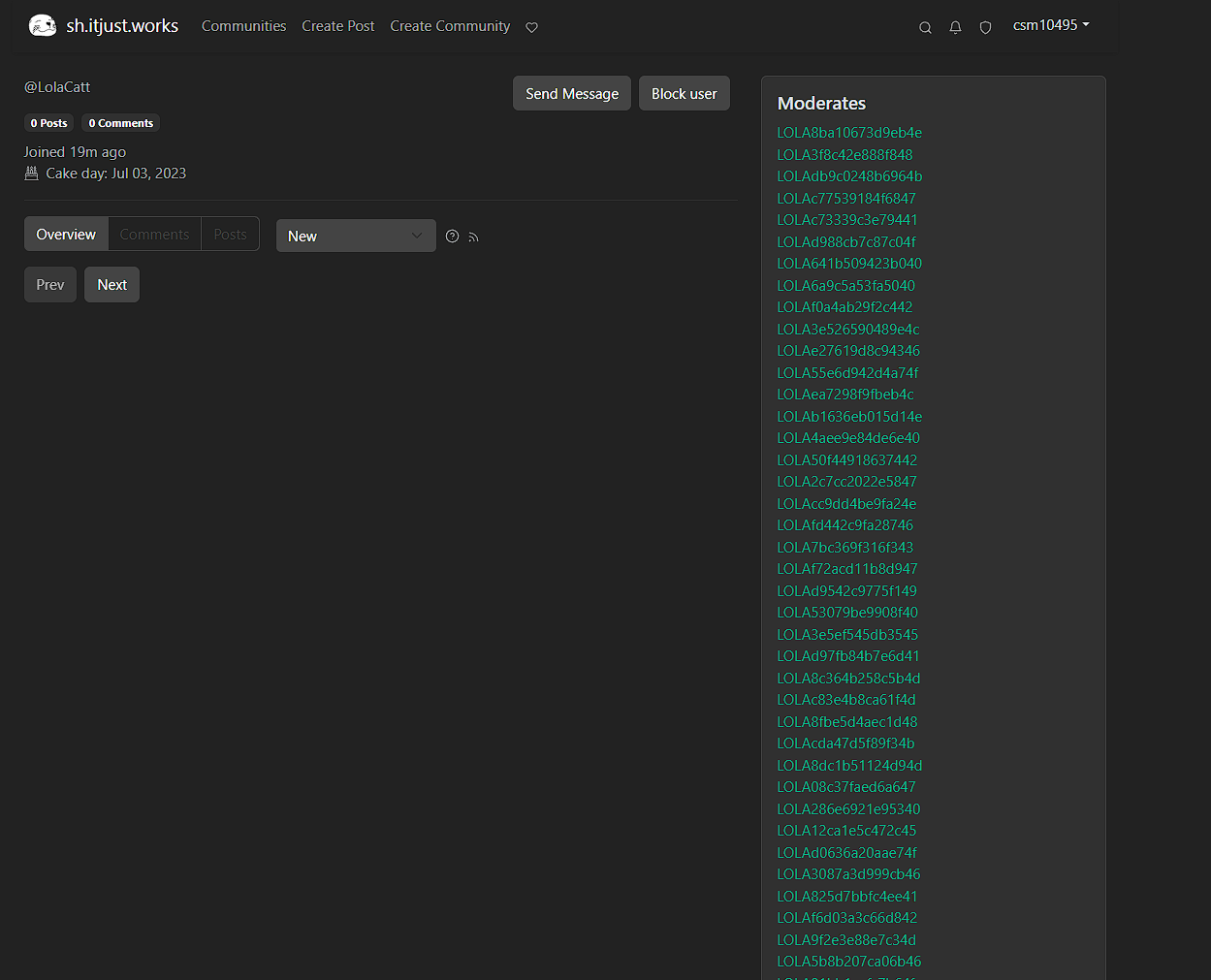
The real pros don’t even link or connect them. You have to know the others exist.