
quercus
- 30 Posts
- 15 Comments
Nice! It took me a couple tries too, but I got one soon after a big storm uprooted a bunch of trees.

 4·3 months ago
For wildlife gardens with native plants, leaving the stems is best practice if not in a fire prone area. From the National Wildlife Federation:
Leave seed heads and flower stalks. Like fallen leaves, the stems and seed heads of perennials can be essential habitat for insects—especially some overwintering native bees—long after flowers have faded, says Mizejewski. Come spring, “cut the stems down to 10 or 12 inches, and native bees will nest inside.” If you prune back shrubs such as forsythia or blackberry, whose stems have hollow or pithy cores, bundle those on your property for more bee nesting sites, says Cane. Mizejewski points to an added bonus of saving seed heads until spring: “They will attract goldfinches, chickadees and other songbirds you can enjoy watching all winter.”
There is nothing that stands out to me as unmaintained, only not maintained in the way people are used to. During spring cleanup and throughout the growing season, invasive species can be removed (and many tend to stick out in the winter as well).
Happy to spread the gospel 🙏 I’m surprised it wasn’t already posted here!

Maryland passed a bill doing just that:
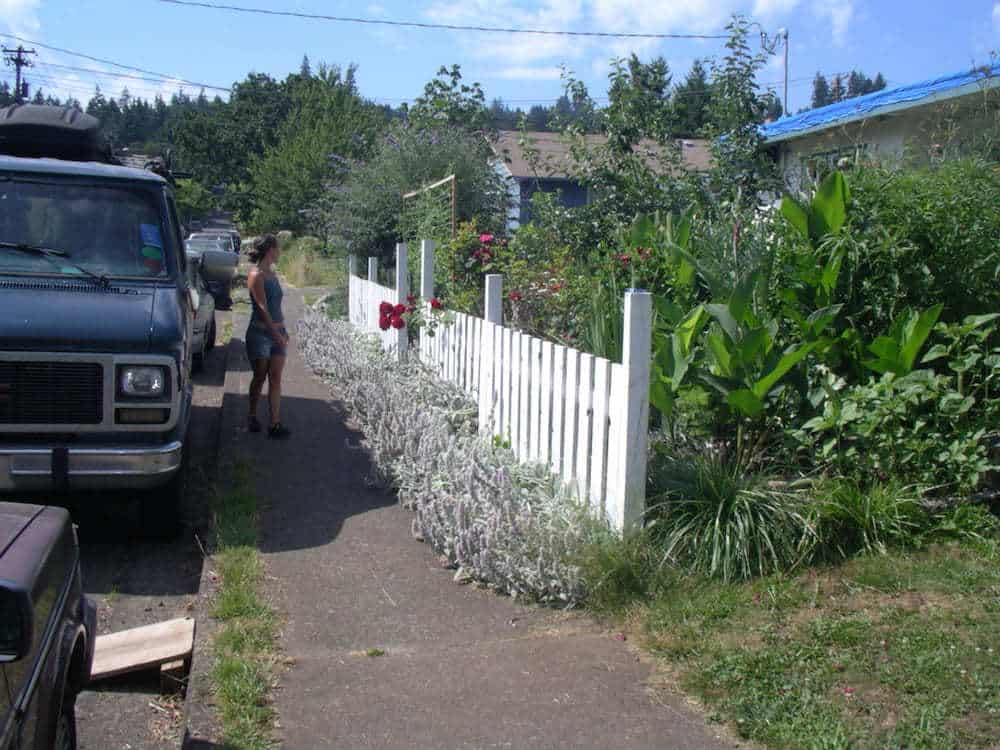
Awesome! Sometimes all neighbors need is to see it in action, to not be the first on the block. Like it gives people permission in a way 😊
Direct link to the Maryland bill passed: https://mgaleg.maryland.gov/2021RS/bills/hb/hb0322f.pdf

 2·1 year ago
The creator’s statements appear to be rooted in the source, “On the Bunny Trail: In Search of the Easter Bunny.”
You may be interested in the discussion under the article between commenter J.H. and the author Stephen Winick, where Winick explains his reasoning on the matter.
The video goes into this somewhat, but mostly focuses on the folklore surrounding the Easter Bunny. It’s speculated that it possibly originated from a springtime children’s game in Germany sometime in the 1600s. However, much is unknown.

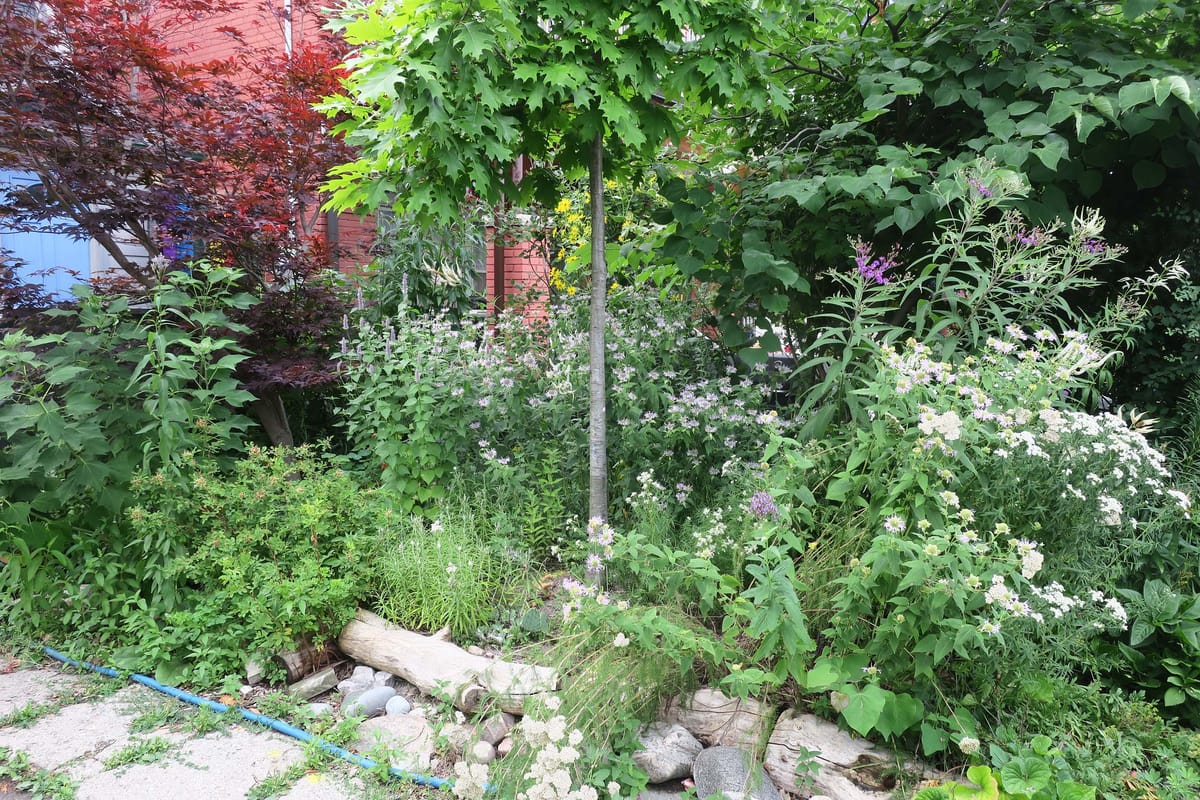
I love these update videos! Most of the stuff I planted two years ago finally started to look like something this summer 😆 but seeing all the monarchs, sootywings, fritillaries, skippers, and so many different bees made the growing pains worth it.
 9·1 year ago
I live in a city, but I’ll share some programs that/organizers who may provide some inspiration:
BMORE Beautiful - provides trash picking kits and helps residents organize cleanups in their neighborhood. They were incredibly friendly, so might be worth reaching out on how to build a similar program in your area
Weed Warriors - trains participants to recognize and remove common invasive plants, provides training for participants on how to organize efforts in their communities
Community gardening - this video is from an animal liberation podcast, but the guest’s opening story of being completely ignorant about gardening but doing it anyway is inspiring. The remainder is about their work on food justice and grassroots organizing
Compost collective - this is the podcast of the guest in the previous video. They interview the founder of Baltimore Compost Collective who works with youth in the city
Guerrilla gardening - this is a classic TED Talk. The speaker discusses growing food in a public space and how they successfully fought their city to keep their garden. They also talk about their volunteer gardening group, planting food gardens at homeless shelters
Maryland Food & Abolition Project - may no longer be active, but an interesting idea nonetheless. Their mission was (is?) to partner community gardens with prisons to provide fresh produce
Echoing @poVoq, don’t discount seniors! I used to be a case manager for the elderly and many are more interested than people give them credit for.



 1·2 years ago
Mr. Trash Wheel is pretty cool:
Most of the flowers are divisions of plants, some volunteers and others I got as plugs in summer 2022. I decided to start small and expand over time. The coneflower was four plants last spring which I divided into 12, then into about 30 this spring. Rose milkweed and late boneset are just as prolific.
I have spread some seeds around and others have blown in. The groundcover in the second photo is all volunteer.
The mulch was leftover from a chipdrop. I used it to make the beds look “intentional” when everything was sparse and muddy back in February :) The plan is for everything to grow so dense that I won’t need to mulch it again.
Watching them flutter around the milkweed, over to my neighbor’s flowers, across the street and back again was beautiful. It was amazing to see one in person. They’re much larger than I imagined and very graceful.
I never took care of the lawn other than mowing it, so much of this stuff was already here in small amounts. Two years ago, I started dividing up the violets and planting them into the grass. They launch seeds up to 4 feet so they quickly spread, clump and bully the grass. Ants move the seeds around too. Last year, I started dividing and transplanting the nimblewill. Panicled aster and late boneset volunteered which pushed out some more.
There’s still plenty of grass closer to my neighbor who treats their lawn. Some I buried in woodchips, the rest I’d like to shade out with edibles and dig out for another rain garden.
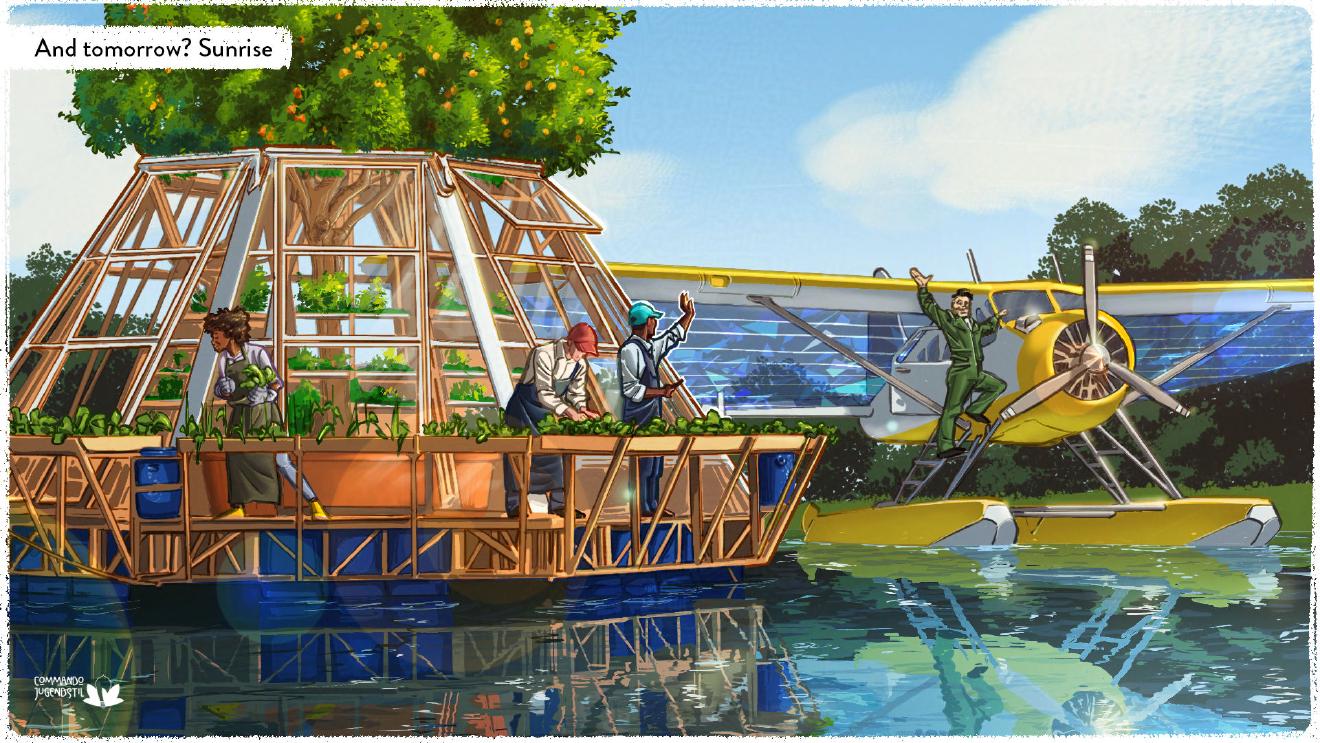
Huh? https://storyseedlibrary.org/art/commando-jugendstil-panel-and-tomorrow-sunrise/