

Didn’t it start ages ago with some nominal monthly/yearly fee, like 99 cents? This was before I started using it, but I could swear it had a fee before Meta bought it and through that time it did build up a pretty significant user base.


Didn’t it start ages ago with some nominal monthly/yearly fee, like 99 cents? This was before I started using it, but I could swear it had a fee before Meta bought it and through that time it did build up a pretty significant user base.


I mean, to be fair to the headline, it does say most [unqualified] Android tablets, not all tablets or just rugged tablets. Maybe a tiny bit misleading but not outright false either.


Kinda sorta. I’m firmly in the millennial generation, so there aren’t as many computers older than me. But I can tell you about my dad bringing home a brand new 486 (25MHz) and temporarily setting it up for the first time on the kitchen table, before it was officially set up downstairs.
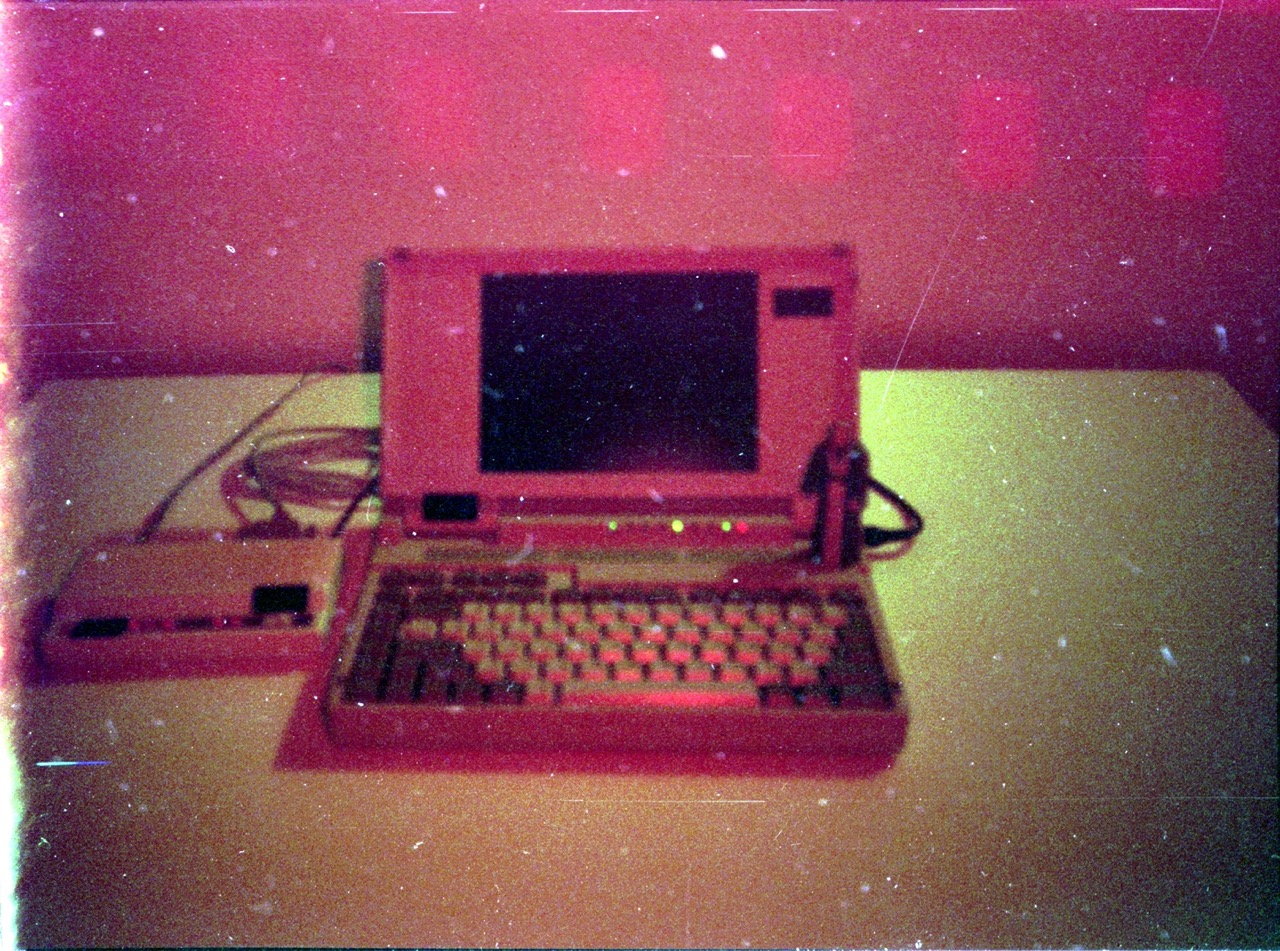
In high school I got a handful of leftover computers to play with. Some early Pentiums, a really weird 486 tablet (still have that in my crawlspace!), and stuff like that. Great to learn hardware on, do some homework in my room, listen to Winamp, etc.
Then college came and I had less time and space. Then I bought a home a couple years later (when they were all on sale!) and had a kid. Most of my time and money goes to those things.
But! I hate where technology is going now. I remember things being fun and innovative, rather than yet another thing weirdly integrated with an app on your phone (likely with a subscription 🙄 ). So I’ve spent some time restoring antique radios, and put together some fun projects I’ve found that use a 3D printer and Raspberry Pi, including a working mini computer that runs a Dosbox instance with my favorite games from that 486.
Tl;dr not that young by Lemmy standards, but I get it!


even though I read this huge wall of text, I’m not closer to understanding what this plugin actually does
Sounds like every piece of corporate literature produced in at least the last decade
I work with a different kind of legacy system. It was retrofitted to work with SOAP, OOP, and some other modern stuff, but none of the old farts bothered to learn it. When I inherited a SOAP service that system used, I had to learn a lot about it to get what I needed.
And honestly? It’s been a lot of fun. It’s a unique kind of challenge, I’ve practically gained celebrity status at work, and even if it’s nothing I’ll be doing long-term it shows how I can pick up weird systems and work with others to make some miracles happen.
My app happened to crop the caption so I didn’t even see it until I saw your comment. I wholeheartedly agree with you, but also don’t like that it lead me to that negative value caption.
Tl;dr your comment has neutral value 😀
That only works if x is already 0
If i is 10 and x is zero, yes, x -= i would have a value of -10. If x was 5 from something else previously, x-=i would end with an x value of -5.
It’s a valid mathematical notation, sure. But there is an implicit understanding that the - in this case is making a number negative rather than subtracting (or, an implicit subtraction from 0).
With the way negative numbers generally work in binary there would be much different ones and zeroes stored behind the scenes, so handling that would have to be pretty intentional.
That said, I did just try it in Java because that’s what I work in normally and I swear I had a gotcha with that. But it worked fine as far as I can tell.
x = -i;
Do many languages let you do that? When it’s in front of a variable I would’ve expected it to be a subtraction operator only and you would need to do x = -1 * i;
I have no idea why you’d need that especially since return y() is pretty easy, but… I want it!
(Actually, I guess a super simple way of overloading a method, like fun x() = x(defaultValue) could be neat)


Hey cool, another AI logo that looks like a butthole!


Here’s the build instructions I used!
https://github.com/c0wsaysmoo/plane-tracker-rgb-pi/tree/main


I will say, I once saw a Reddit post about a flight tracker that used a Raspberry Pi, an LED array, and a 3D printed case. I’ve always been an airline nerd, and this thing will tell me what planes are flying near me. Is it dumb? Yup. Did the costs add up? Sure did! Does it bring me joy to see that the daily flight from Tokyo is the one making noise over my house, or that one particular flight that’s neither to nor from my home airport passes over my neighborhood almost daily? Absolutely.

To be fair, it’s USB-C and you might have better luck with that.


Lots of design considerations to be made there. When they can easily include a micro-full HDMI cord and adapters and stuff are easy to come by, it’s not a horrible compromise IMO.


Just looked it up, and I think my point is correct. You could get about one regular HDMI port in the space they used for the two micro ones. And that row of stuff seems kinda full


I don’t see a good view of the row of ports, but on my 400 there’s quite a bit there between the HAT, USBs, micro SD, etc. My guess is that full HDMI would cause some space issues
If it counts, I encountered a Java file that, unbeknownst to me at the time, was duplicated across two different places. The project was essentially abandoned for years, and the file was one that didn’t change much so I left it alone for a year or so.
Eventually I had to add a method to it. Compiled just fine, runtime threw a no such method error. Turned out Eclipse was using one, but when Maven did its build it used the old duplicate I didn’t know existed.
Took me a while to find that one!
Ingo
I’m not dead yet!